Description
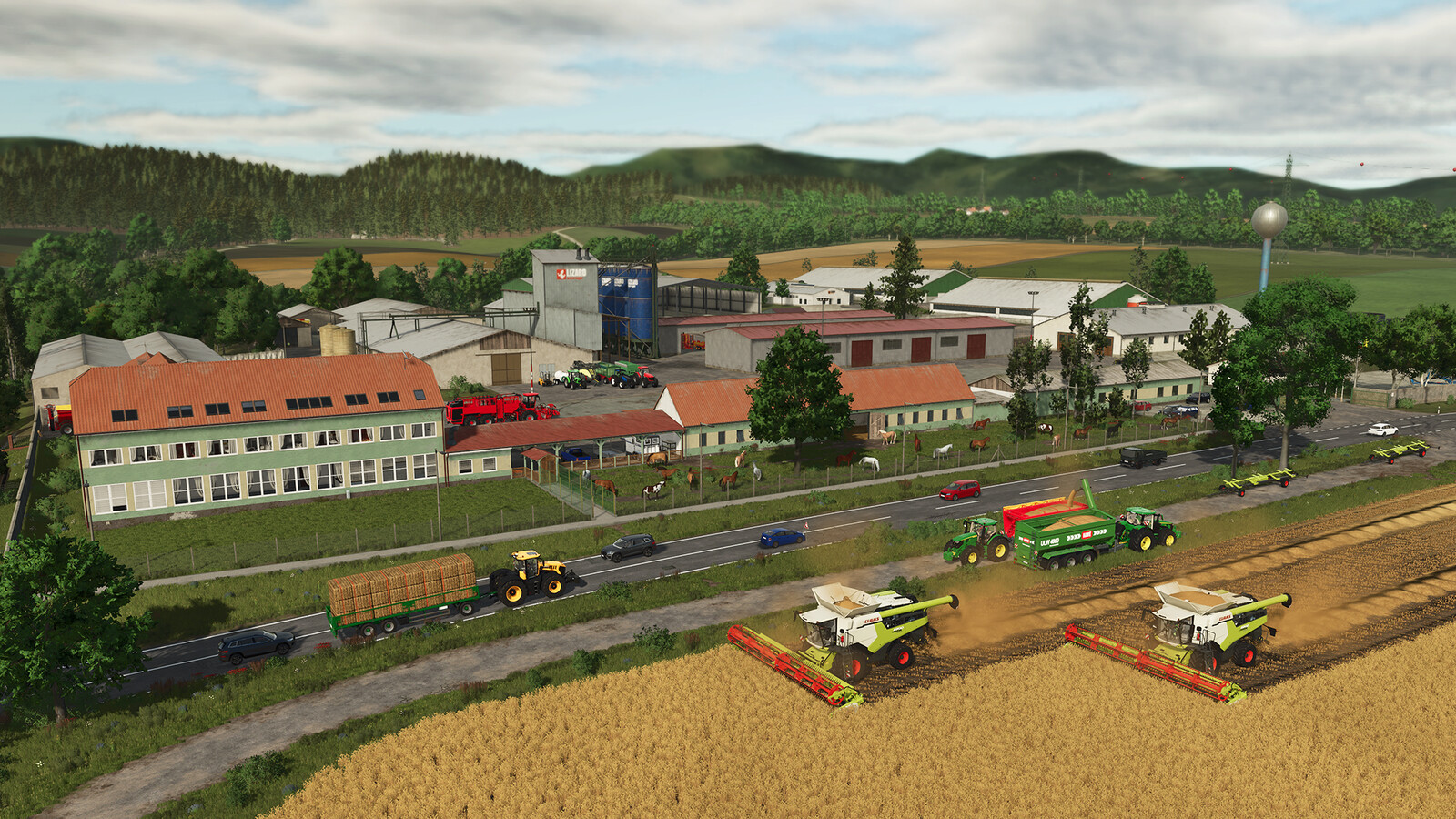
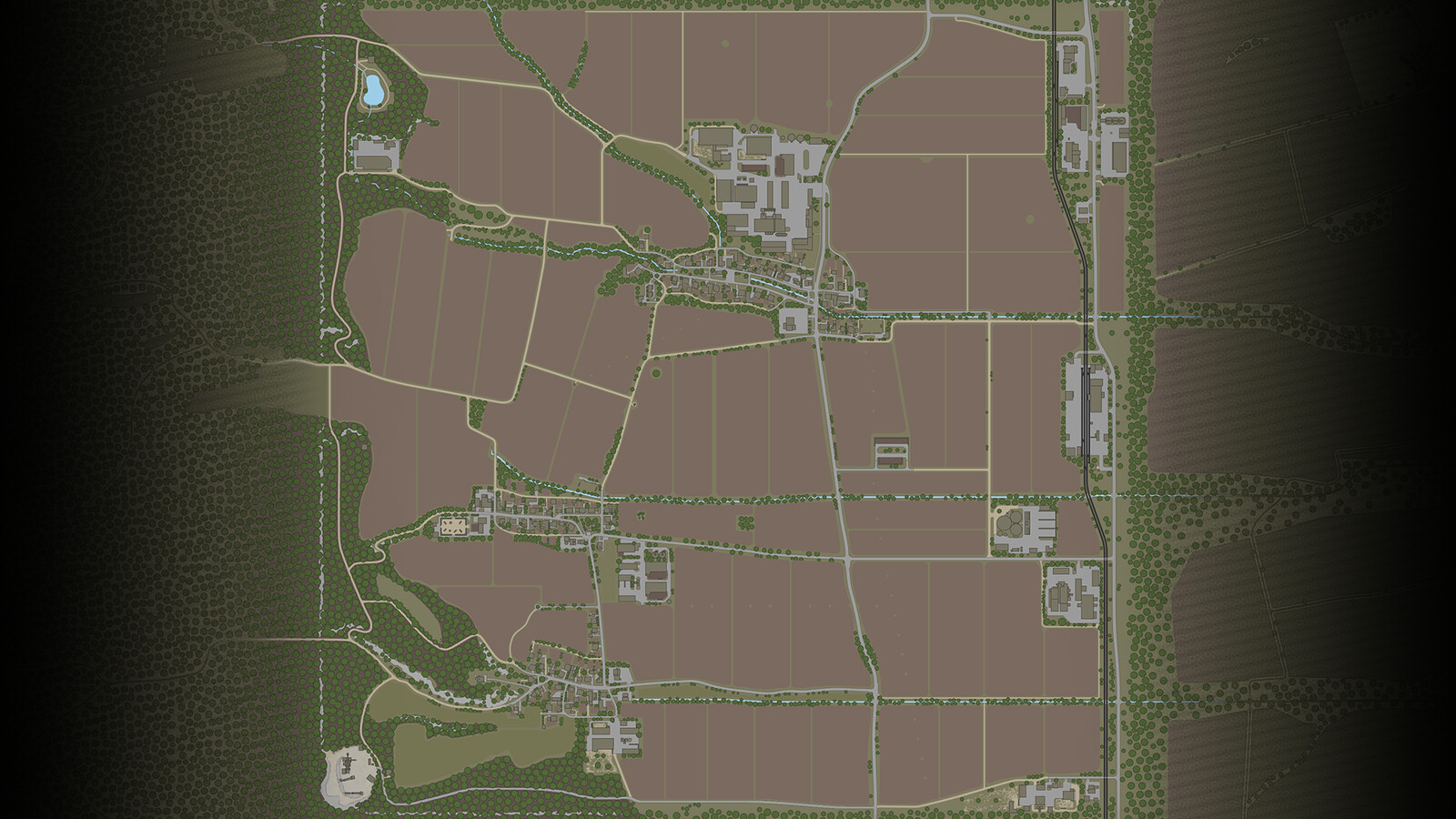
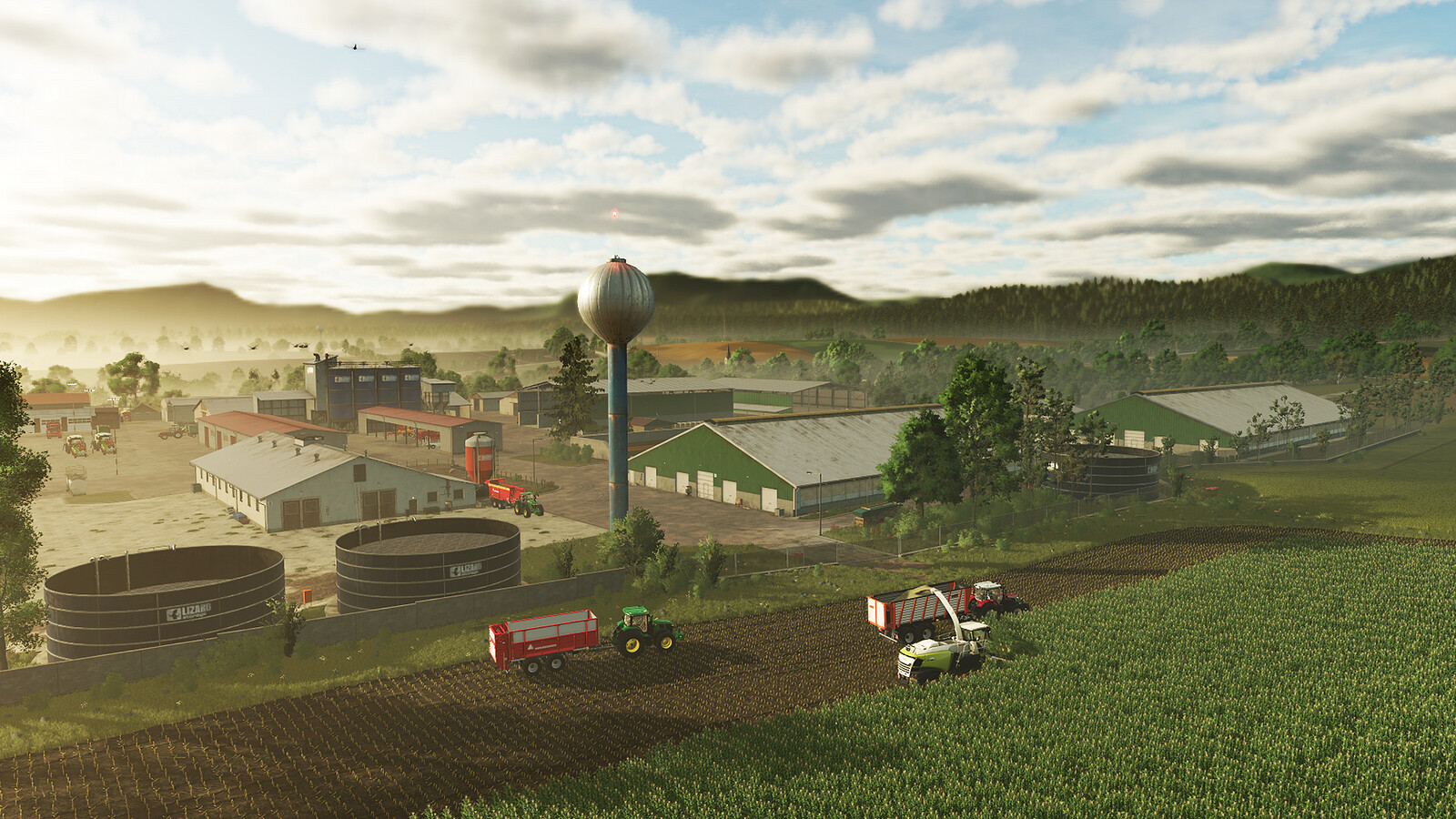
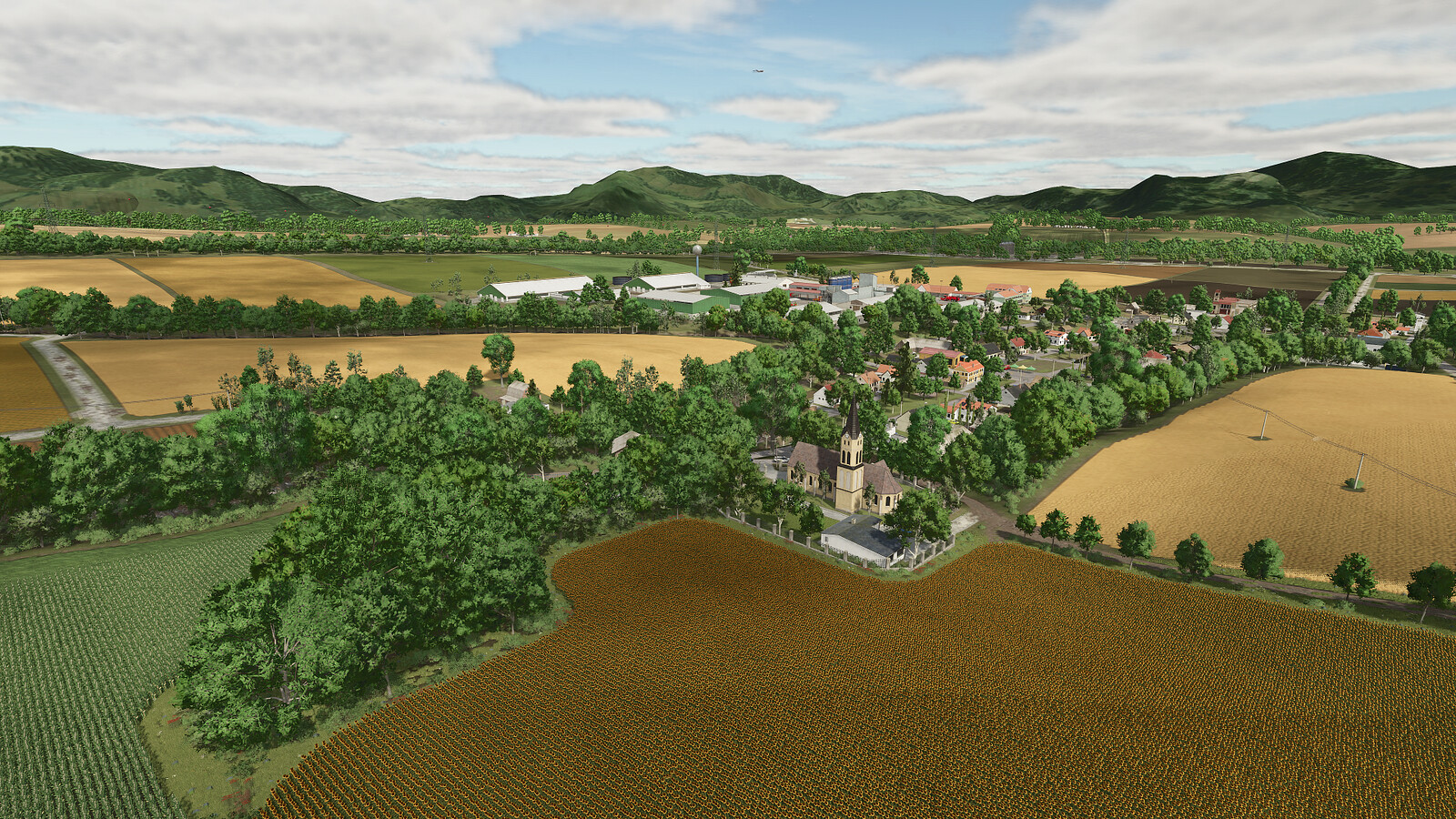
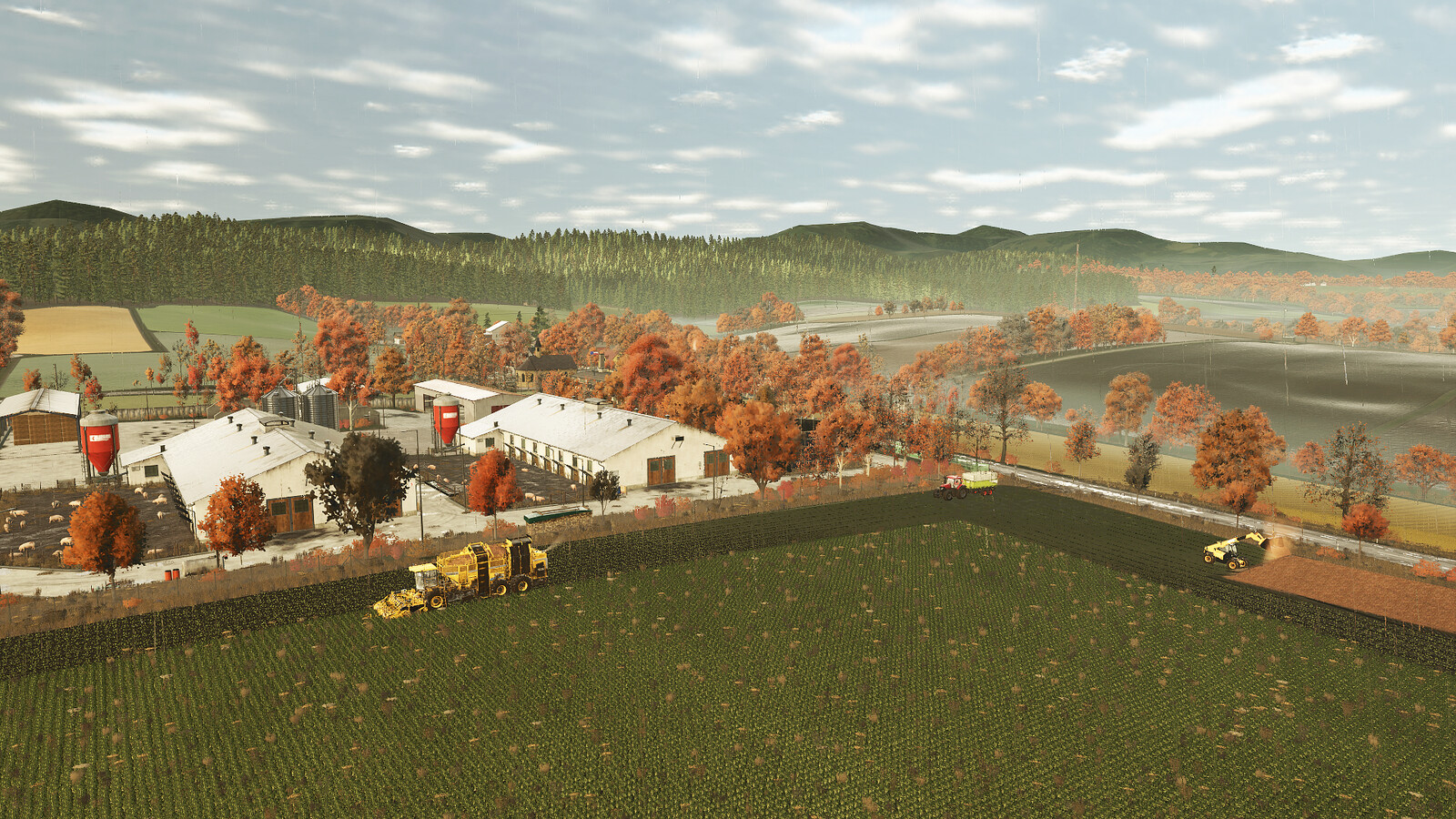
Fictional map inspired by a modern agricultural company and its surroundings in western Slovakia. It features 3 pre-placed farms, which must be acquired by buying the farmland they stand on — after purchase they are fully editable: individual buildings and fence sections can be sold, farms expanded, or cleared entirely for a custom build. The Main Farm includes 2 cow barns, a pig barn, a horse barn, 2 calf/heifer shelters, a farmhouse, a large grain silo with animal feed production, a vehicle workshop, 2 covered bunker silo buildings (6 bunkers total), numerous vehicle shelters, bale and pallet storages, manure storage, slurry tanks and a water tower. The Pig Farm offers 2 pig barns with silo, workshop and storages; the Sheep Farm has a sheep barn, chicken coop and supporting infrastructure. The map contains 70 fields plus 6 meadow fields (mostly large with varied shapes), a forestry area with 14 purchasable forest parcels, and all contract types including field missions, dead tree removal, wood transport and rock removal.
The economy includes 8 selling stations (Transport Company, livestock market, supermarket, farmers market and others) and 7 buying stations — gas stations with EV charging and methane refill, a lime station, farm supplies loaded directly into trailers, and pallet goods. Prices drop temporarily once a station's desired quantity is reached. All stations and productions have individual opening hours with automatic gates. Eleven production sites are built in: bakery, grain mill, dairy, sugar mill, sawmill, carpentry, spinnery, tailor shop, food processing plant, preserved food factory and biogas plant, most with shared forklifts and a public sugar beet loader at the sugar mill. A rentable train with railroad silos and a sell point is available, plus 100 collectible wooden toys in 10 sets (1,000 per toy, 100,000 per completed set). Two family businesses — a piano factory and a wood artist — can be supplied with materials or bought and run for profit, and 3 houses under construction can be completed by selling them building materials; placeable constructible rental houses provide additional rental income.
A separate industry chain revolves around an abandoned quarry in the forest, acquired with its farmland. It requires heavy cleanup — removing overgrown foliage, rocks and destroyed buildings — before producing stone, limestone, clay and iron ore. Stone and limestone are crushed into gravel and lime, which feed the cement factory alongside clay, sand (only purchasable from the construction material trader) and blast furnace slag from the iron furnace, where iron ore is smelted into metal for profit. The cement factory and iron furnace must be built by the player; the included cement factory uses a more realistic recipe than the base game and adds clay bricks and clay roof plates. All quarry elements are also available as placeables for building a custom quarry anywhere, and excess raw materials can be sold.
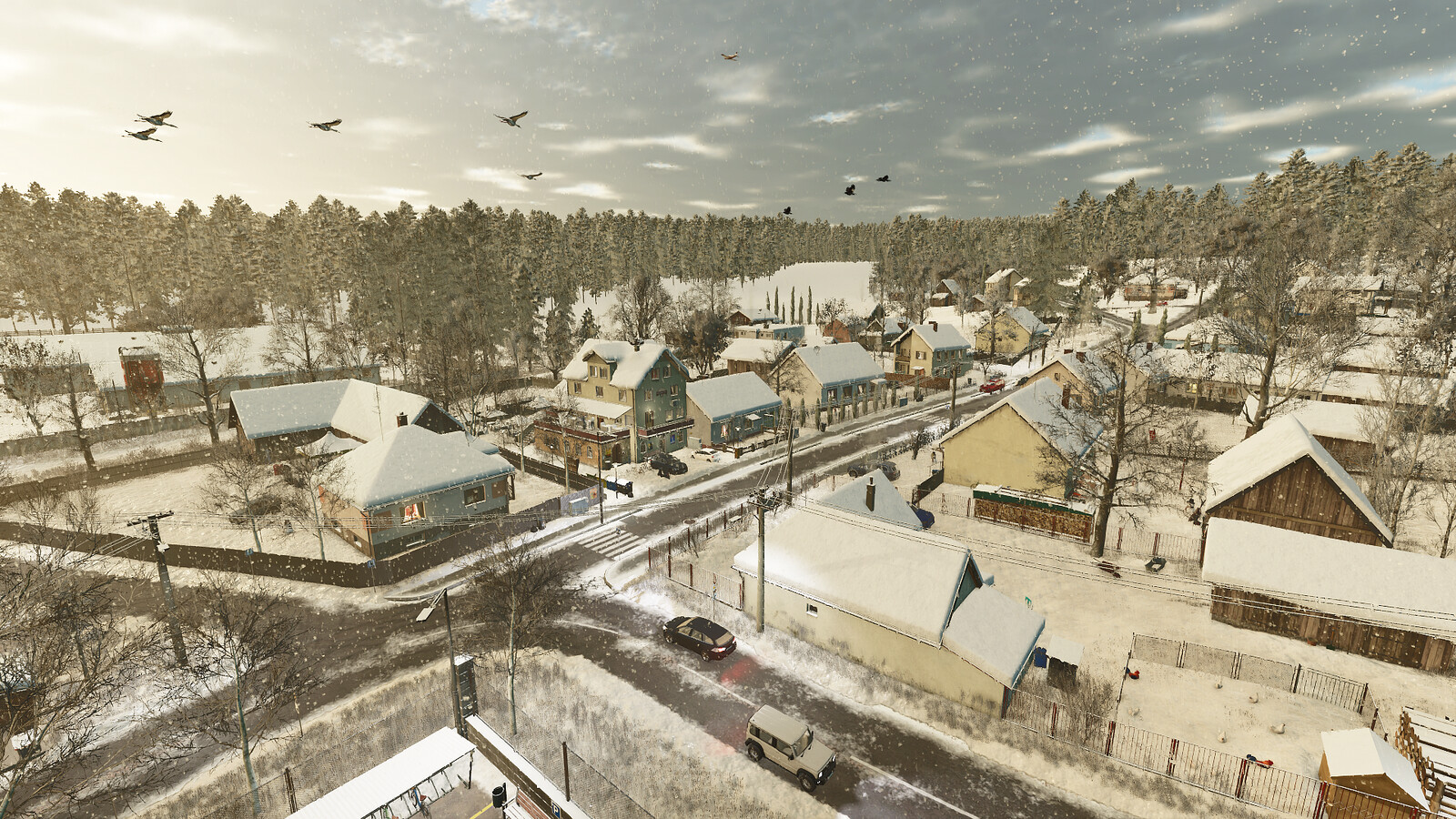
Villages are functional: nearly all properties can be purchased and used as homes by placing a sleep trigger, with enough space for extra construction (existing objects cannot be removed). With compact equipment, crops can even be grown in yards, and every gate on the map opens regardless of land ownership. Properties like restaurants, pharmacies and football fields generate passive income of 1.1$ per hour per 1,000$ of farmland value.
Animal husbandry is rebalanced — food and straw consumption, manure, slurry and milk output, and animal prices are slightly adjusted; sheep, goats and chickens produce manure when bedded with straw. Placeable calf huts come in single and five-calf group variants. Three new crops are added: alfalfa (used in animal feeding, accepted by the map's edited and custom bunker silos), rye (processed into flour and bread, harvestable by combine or windrower) and mustard (further processable). All crops have enhanced growth stages with distinct heights for smoother visual growth, and stubble destruction works via rolling — wheat, barley, canola, oats, soybeans and rye require it, while corn, sunflowers, root vegetables, rice, cotton and similar crops do not.
Specifications
- Game
- Farming Simulator 25
- Category
- Животноводство
- Version
- 1.1.2.0
- Size
- 1 GB
- Published
- 14.10.2026
- Views
- 7
Attribution
- Source
- https://www.farming-simulator.com/mod.php?mod_id=349449&title=fs2025
- Author
- MrHector
- Imported
- 2026-10-14 16:54
Similar mods
More mods for Farming Simulator 25 — matched by category, tags and popularity
Comments
0No comments yet — be the first.