Description
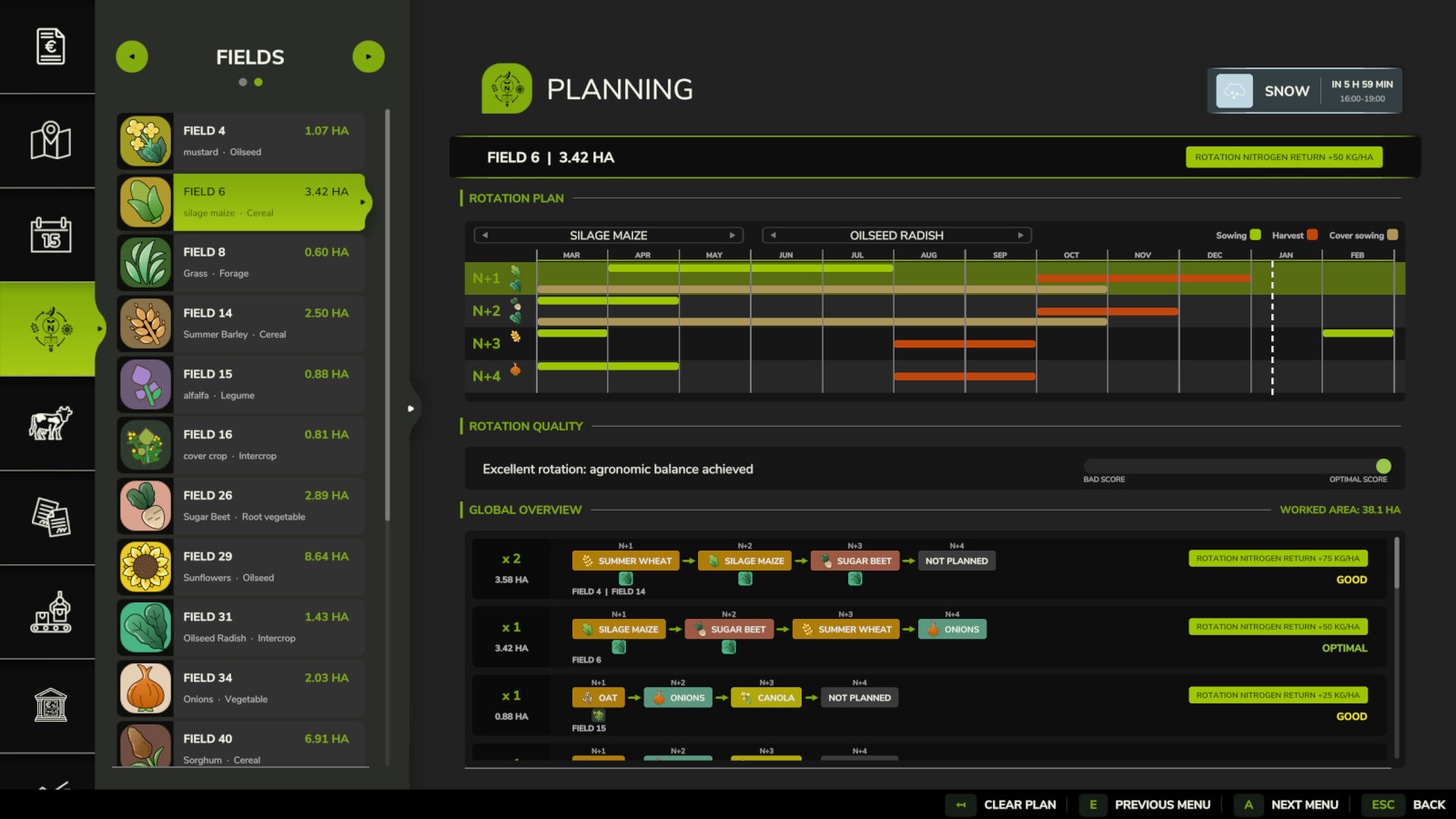
This gameplay overhaul makes crop rotation a core mechanic: every field remembers its last four rotation entries, whether crops or fallow years. A rotation calendar lets you build a real repeating cycle of 2, 3 or 4 yearly slots filled with crops or fallow, including the wrap from the last slot back to the first. A planned fallow slot adds a full year of spacing before the next sensitive crop, but does not instantly clean the field. The planner shows a rotation quality rating, tailored advice and flagged conflicts before you sow — diversity pays, so rotate more crops, avoid repeating the same family and alternate winter and spring sowings. Fields sharing a plan are grouped together with combined area, quality and residue.
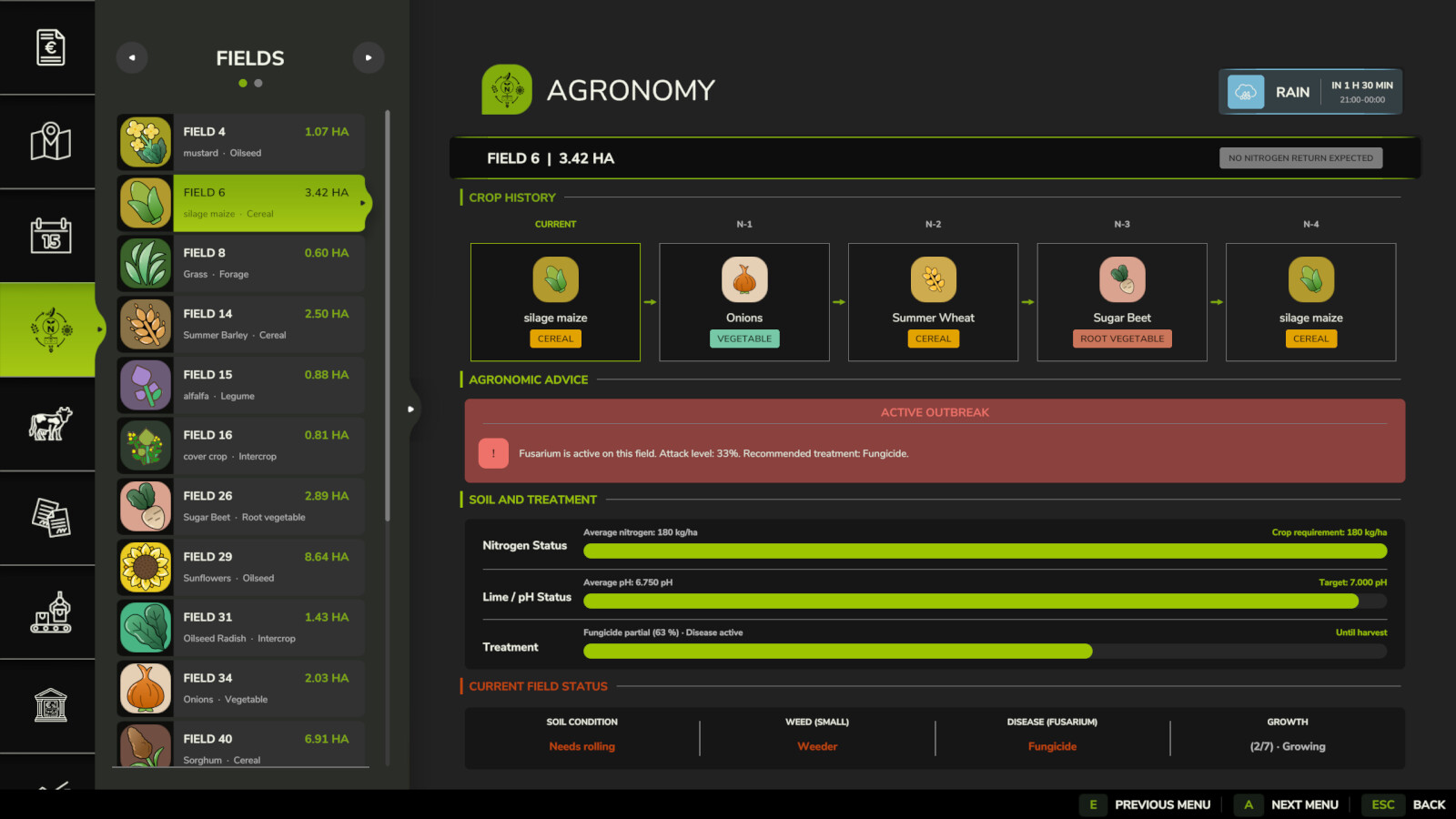
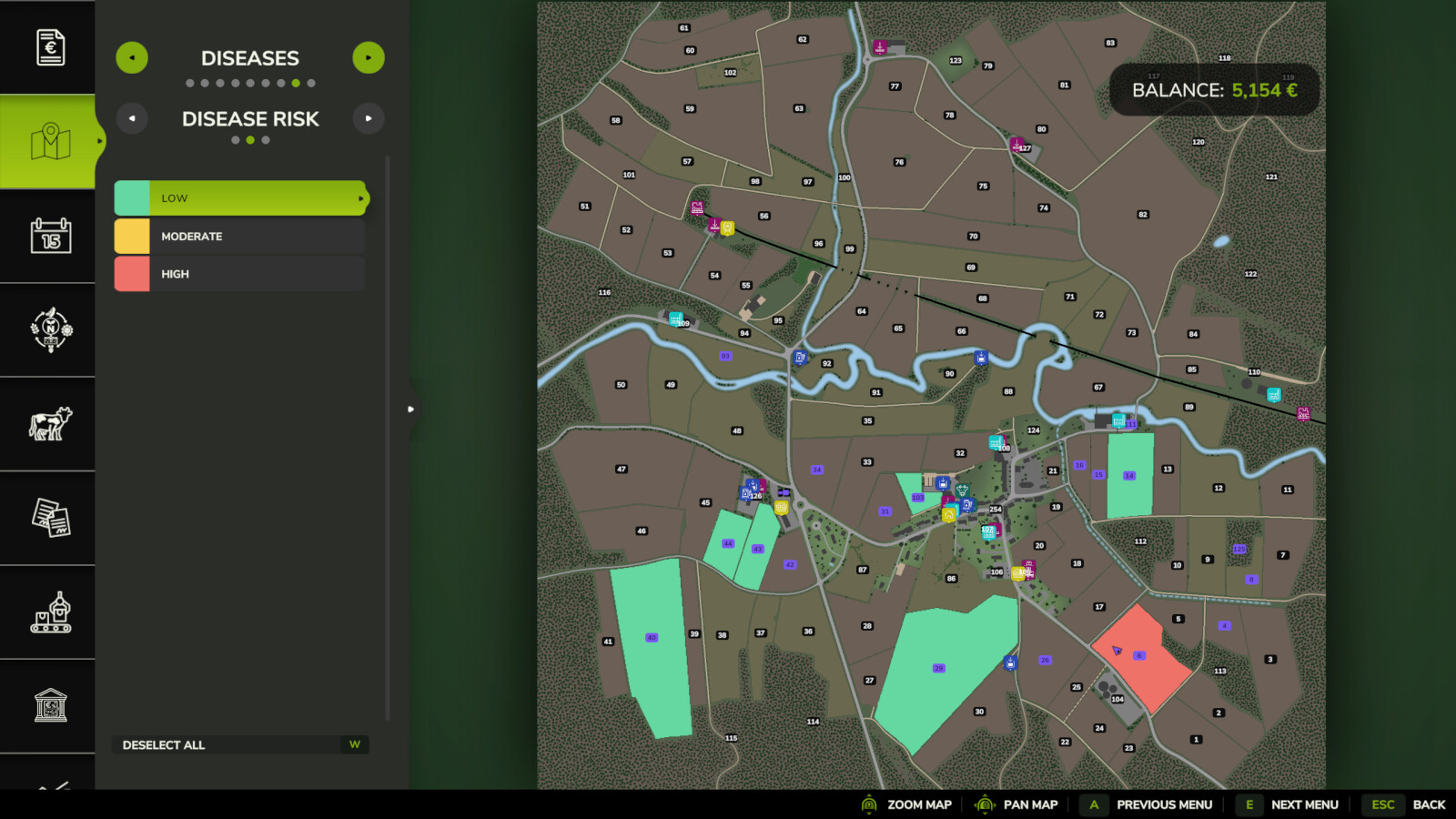
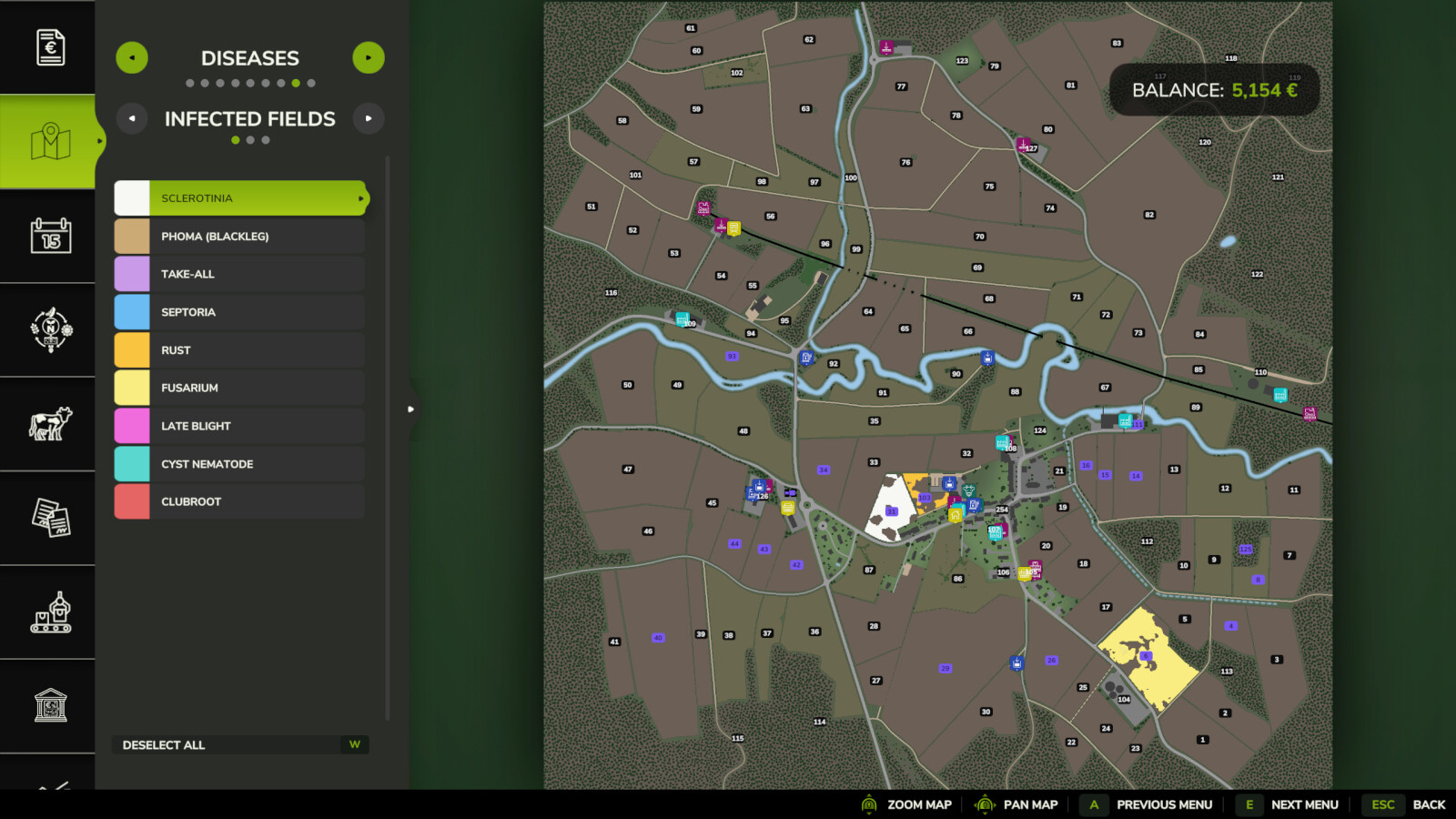
Nine diseases affect specific crops: sclerotinia, phoma, take-all, septoria, rust, fusarium, late blight, beet cyst nematode and clubroot. A first outbreak can strike even a never-affected field, with weather raising the chance for weather-sensitive diseases. After a real outbreak, most diseases can remain in the field after harvest — the more advanced the outbreak, the greater the risk for the next sensitive crop. This residual risk falls once per calendar year, but beet cyst nematode and clubroot may persist indefinitely. Infections stay hidden until they start causing damage; before that, only the Disease Risk map and preventive advice hint at danger. Once damage begins, the outbreak shows on the Infected Fields map, the field card and the on-foot HUD, with a notification.
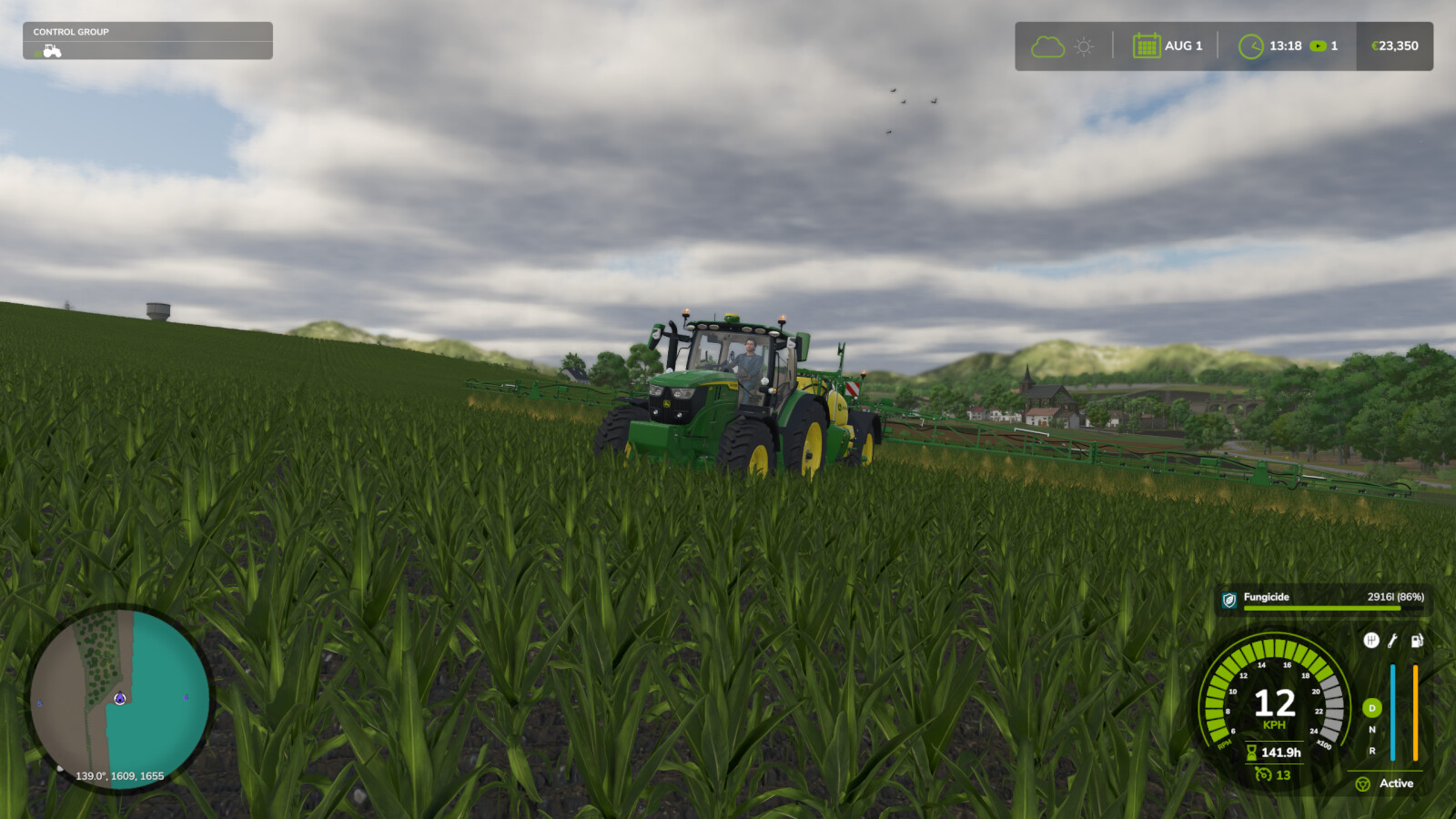
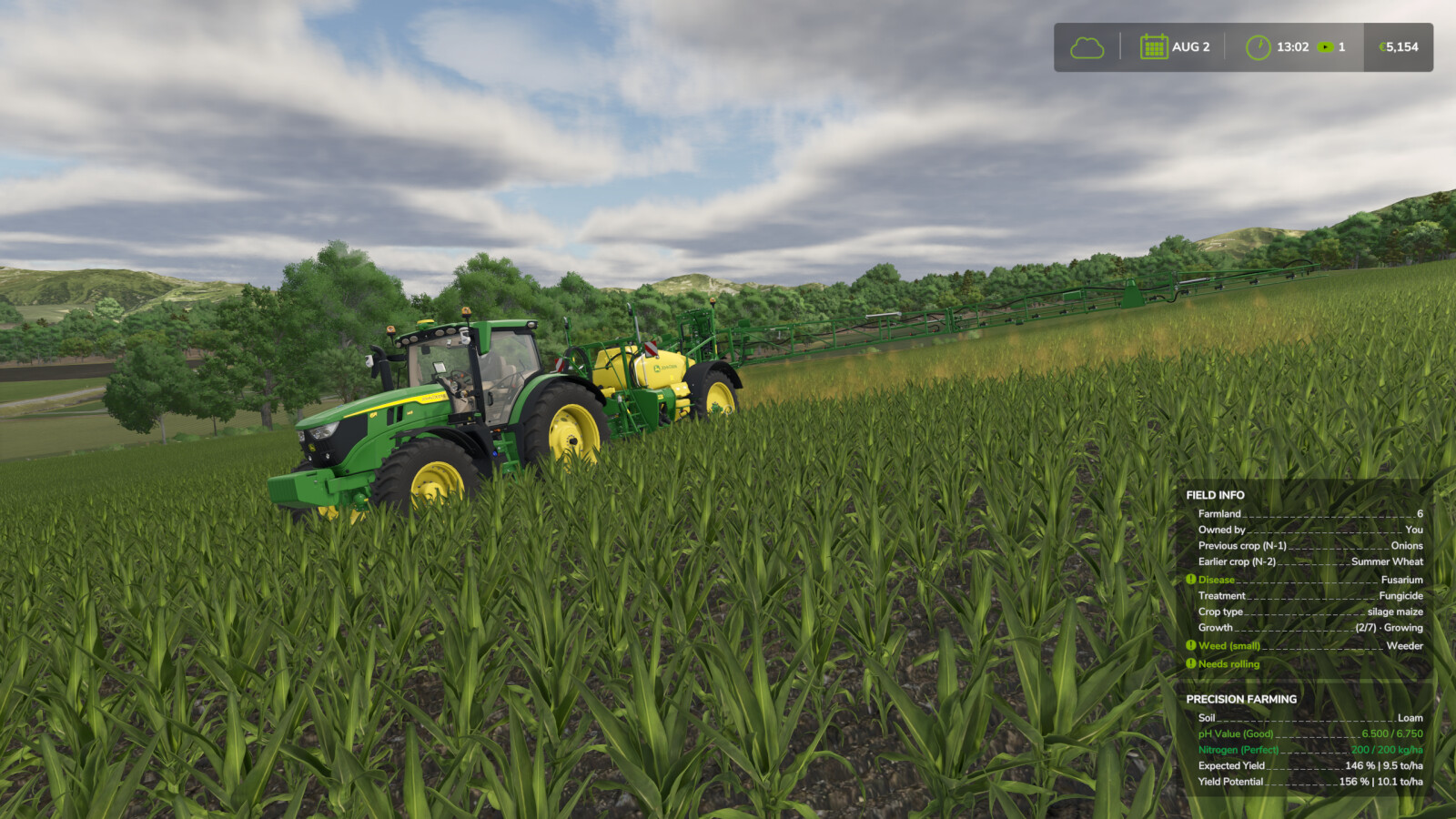
Treatments use the fungicide AMISTAR and nematicide VELUM PRIME, applied with any compatible sprayer. Protection is proportional to the share of the field sprayed. Fungicide lowers outbreak chance, slows an active disease and shields sprayed crop from destruction, and a smaller outbreak leaves less disease behind — but spraying never cleans an already contaminated field. Nematicide protects sprayed ground for three months per field and can be renewed, though it does not remove nematodes. Neither product restores lost crop, so spray early. Nothing works against take-all or clubroot: only rotation keeps them in check.
Legumes destroyed by tillage (not merely harvested) return real nitrogen, split between the next crop and the one after — in kg N/ha: alfalfa 80 then 50, vetch-rye 60 then 20, clover 50 then 20, soybean 40 then 10, pea 40 then 10, green bean 20 then 5. Cover crops count as an estimated +25 in the planner. With Precision Farming the nitrogen lands on the nitrogen map; without it the mod adds one fertilizer level.
In-game tools include a dedicated Crop Rotation tab in the ESC menu, three map views (infected fields, disease risk, treated ground), a treatment gauge showing sprayed share, disease status and protection duration, a detailed field card (current crop, growth stage, required soil work, weeds, detected disease and treatment, nitrogen, pH), an on-foot HUD and a weather header for timing sprays. Host and admin console commands allow forcing infections, running disease ticks, printing disease state and clearing diseases for testing. Works in singleplayer and multiplayer, with or without Precision Farming, and supports 27 languages.
Specifications
- Game
- Farming Simulator 25
- Category
- Комбайны
- Version
- 1.0.0.0
- Size
- 4 MB
- Published
- 14.10.2026
- Views
- 2
Attribution
- Source
- https://www.farming-simulator.com/mod.php?mod_id=370461&title=fs2025
- Author
- Squallqt
- Imported
- 2026-10-14 14:44
Similar mods
More mods for Farming Simulator 25 — matched by category, tags and popularity
Comments
0No comments yet — be the first.